CITATION
Kraebel, CJ and AF Pillsbury (1934) Handbook of erosion control in mountain meadows. USDA Forest Service, California Forest and Range Experiment Station, Berkeley, CA.
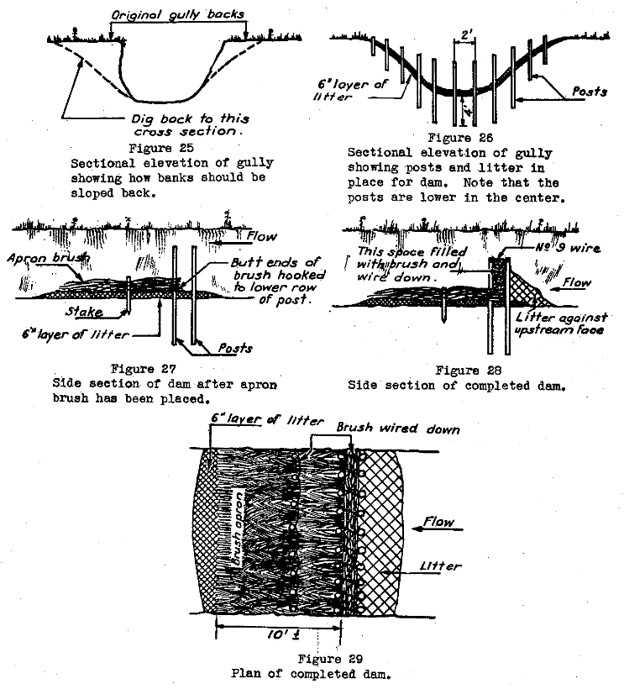
FIGURES 25-29
WRITTEN SUMMARY
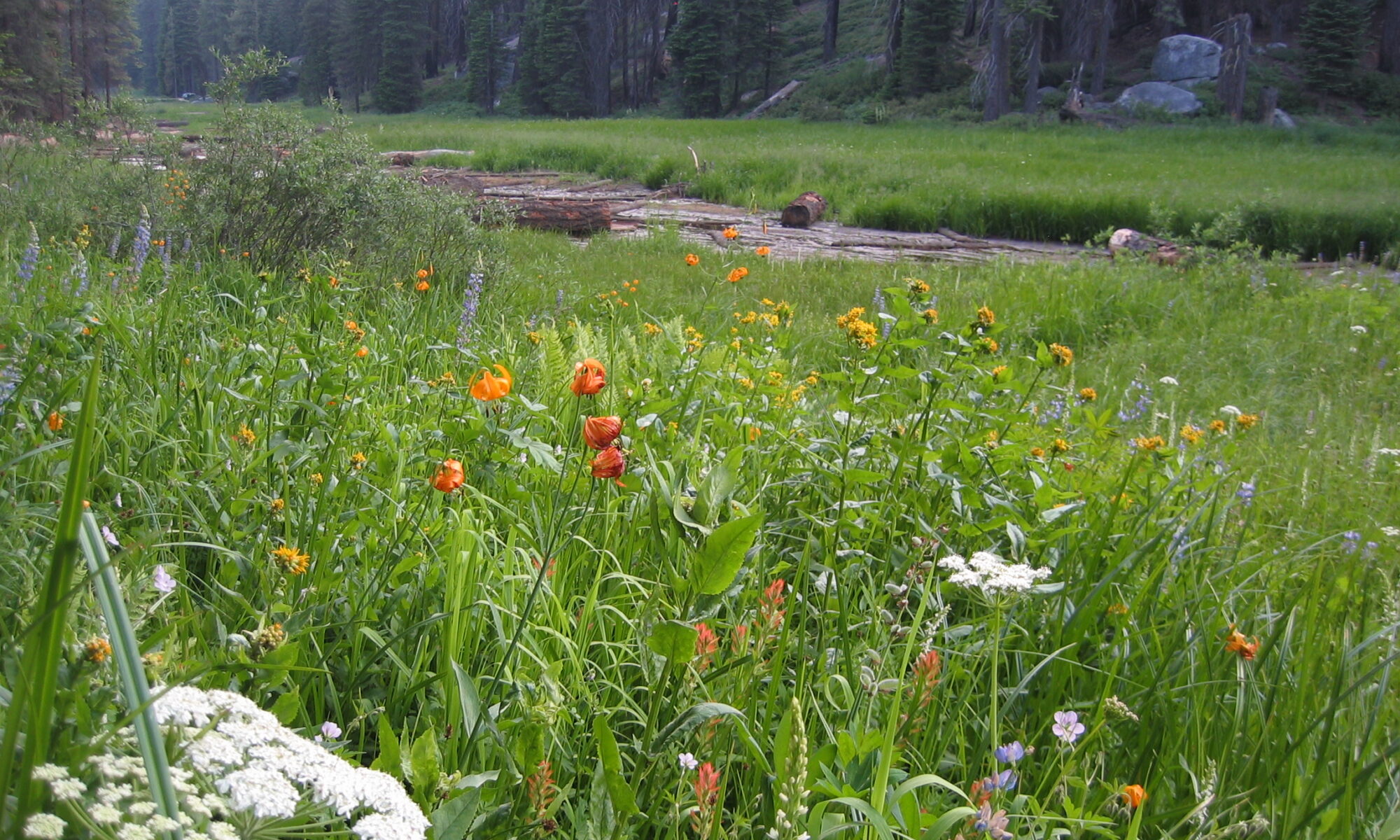
Control of abnormal or accelerated erosion in mountain meadows is an essential feature of any conservation work on the range lands of National Forests. Mountain meadows can be defined as those open areas vegetated with grasses and sedges kept green through most or all of the summer months by a high water table which offers a constant supply of moisture to the grass roots. Although such meadows compose only a small part of the total area of grazing land, they provide the greater part of the livestock forage through the hot, dry California summers.
Meadow erosion is characterized by sharp active gullies, from one foot to fifty feet or more in width, and from a few inches to ten feet or more in depth, which have cut through old meadows within recent years. Their recent origin, evidenced by their present active operation and by the testimony of ranchers, indicates that the disturbing factor has entered the picture since the advent of the pioneer. These gullies have caused not only a loss of fertile top soil and of meadow area, but, more serious, have drained the meadows by progressive lowering of the water table. With this increasing dryness of the sub-soil, added to the punishment of heavy grazing, the original succulent grasses and sedges gradually disappear and are replaced by less desirable plants such as sage brush and other drought resistant species which may have little or no forage value.