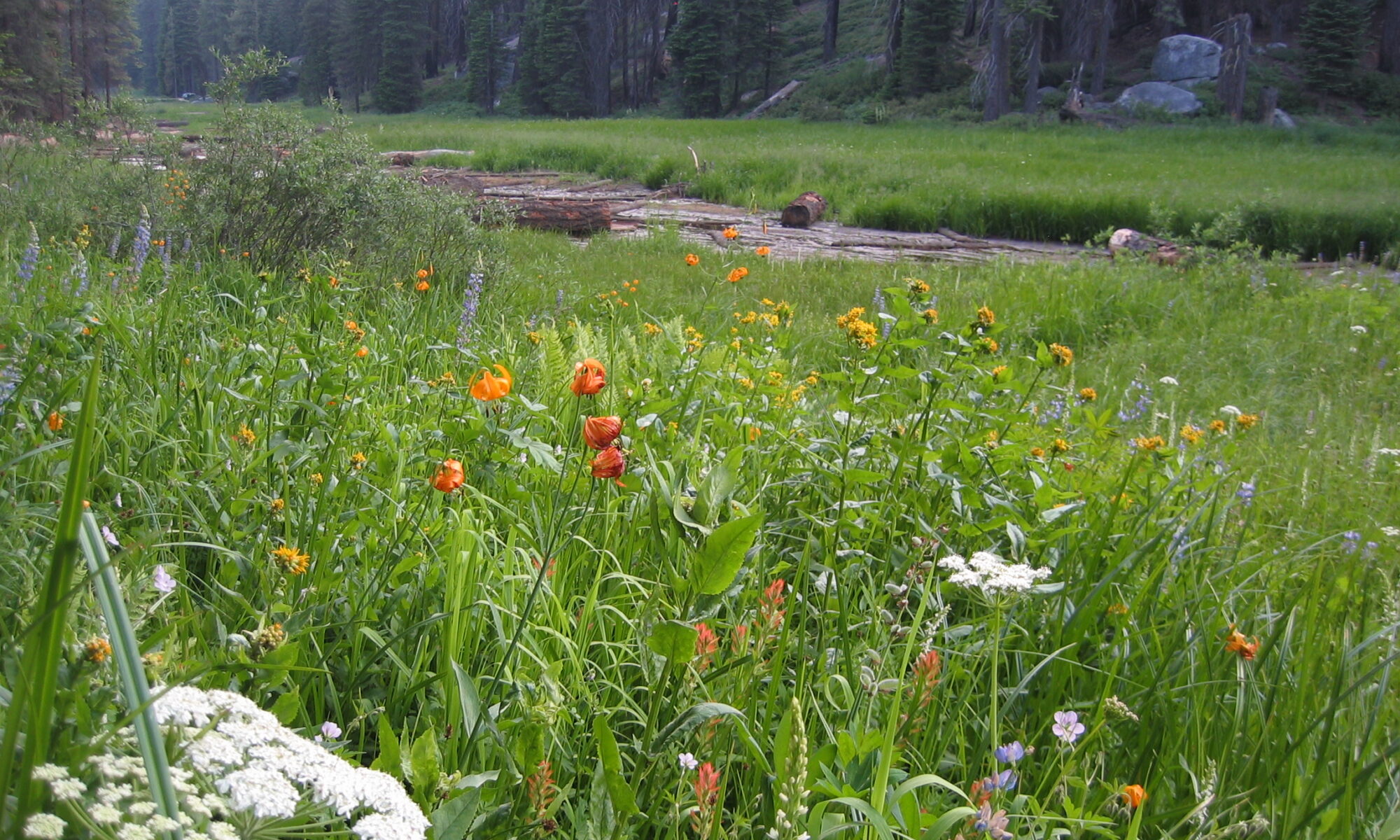
Thanks to Steve Bumgardner for making such a great video, and to everyone involved in this big bold restoration for making it happen!
2024 Tioga Road opening date prediction

Spring has sprung, flowers are blooming, and my thoughts turn to when I’ll be able to drive through Yosemite and see Tuolumne Meadows again!
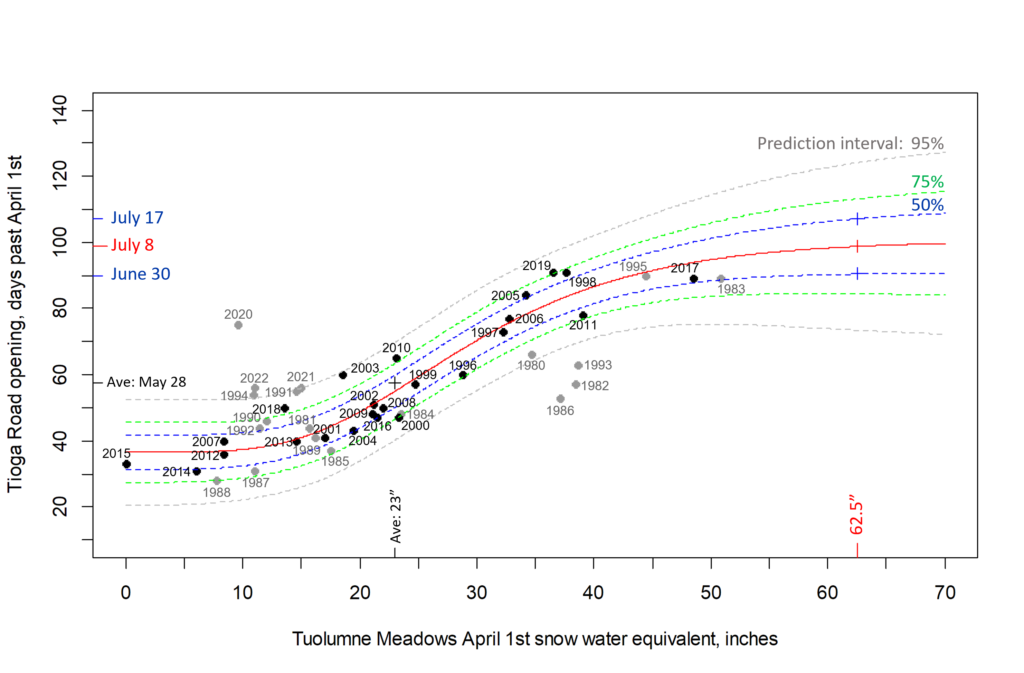
This year the April 1st measurement of snow water equivalent (SWE) in Tuolumne Meadows is 19.9 inches. My model of the Tioga Road opening date as a function of SWE predicts that the road will open on May 22 this year, with a 50% chance that the actual opening date will fall in the May 16 – 28 range.
This year’s prediction is a full 2 months earlier than when the road opened last year, July 22nd.
As before, I’ve excluded a bunch of years (grey dots and numbers on the graph) because of various management and Park operations issues. So the model and reported averages are all based on the black dots and years only.
Snow data here: https://cdec.water.ca.gov/reportapp/javareports?name=COURSES.202404
Tioga Road opening dates here: https://www.nps.gov/yose/planyourvisit/seasonal.htm
World Wetlands Day 2024Feb2
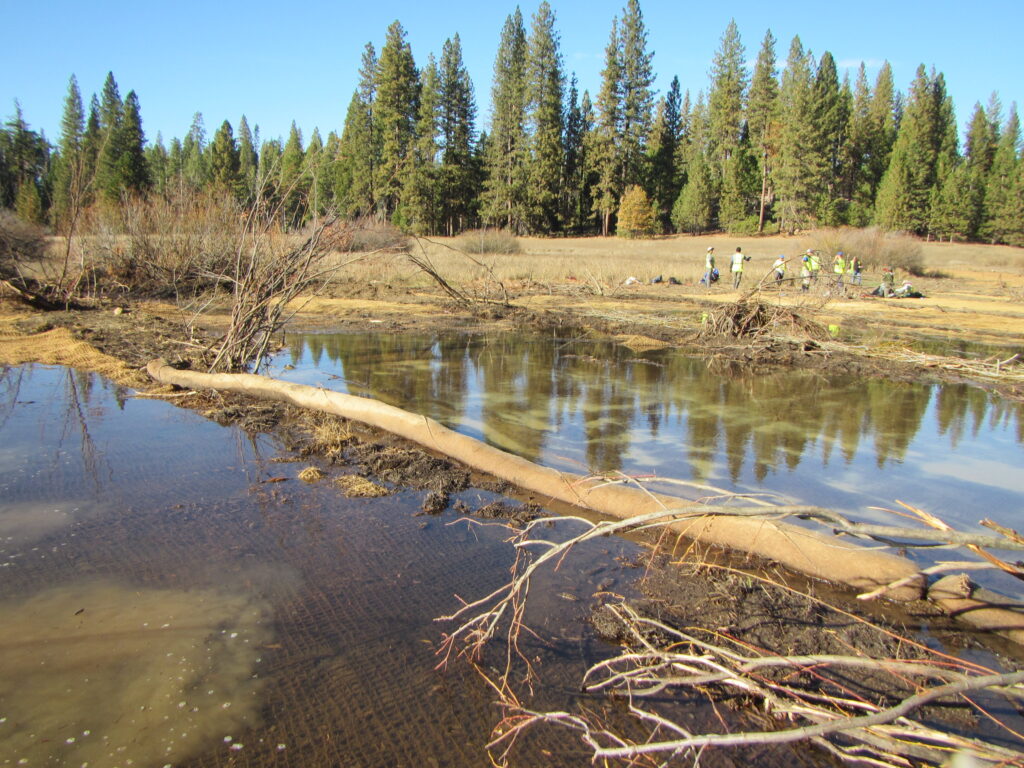
For World Wetlands Day here’s a picture of water flowing out onto the surface of Ackerson Meadow, Yosemite National Park for the first time in >100 years. It’s an honor and privilege to be a part of the team restoring this wetland by filling in an enormous erosion gully. https://www.nps.gov/yose/getinvolved/ackersonmeadow.htm
2023 Tioga Road opening prediction
It’s that time of year again to guess when the Tioga Road will open!
The 2023 Tioga Road opening date prediction is July 8th,
with a 50% chance that the real opening date will fall between June 30th and July 17th.
This is based off of the WHOPPING 62.5″ of snow water equivalent measured at the Tuolumne Meadows snow course for the April 1 report.
This huge winter has presented many challenges, this prediction included. For the first time since I started this in 2018 I need to extrapolate, to make a prediction outside of the range of existing data. I’ve ditched the linear model, since it doesn’t make sense that added inches of Apr 1 snow will have the same effect on road openings from May to July. As a snowpack lingers into June, those extra inches will melt away much faster than they did in April and May. So, I switched to a Gompertz function that has a lower and upper asymptote, which seems like a much better model for how snowpack affects getting a road open.
Snow data here: https://cdec.water.ca.gov/reportapp/javareports?name=COURSES
Past Tioga Road opening dates here: https://www.nps.gov/yose/planyourvisit/seasonal.htm
Data excluded from the model are the grey dots and dates on graph: 1995 and earlier, due to significantly different wilderness and safety regulations; 2020-2022 due to covid impacts to Park staffing and operations.
I’ll post the R code to Github if anyone wants it.
Animal life in the Yosemite; an account of the mammals, birds, reptiles, and amphibians in a cross-section of the Sierra Nevada.
Joseph Grinnell and Tracy Irwin Storer
CITATION
Grinnell, J, and TI Storer (1924) Animal life in the Yosemite: an account of the mammals, birds, reptiles, and amphibians in a cross-section of the Sierra Nevada. University of California Press.
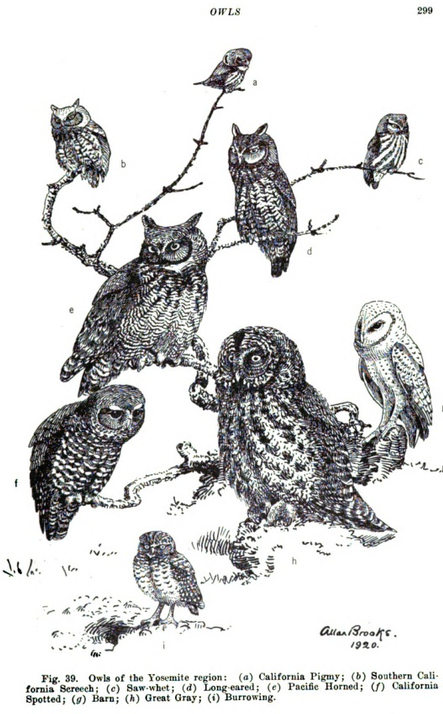
FIGURE 39
WRITTEN SUMMARY
Of the thousands who each year visit the Yosemite Valley and its environs, a certain proportion are already interested in natural history; and anyone who leaves the region without gathering some definite knowledge of its natural history has failed to get adequate gain from his opportunities. The geology, topography, and botany of the Yosemite have been studied with some care; and there are instructive and stimulating manuals available dealing with these subjects. But heretofore only a few brief accounts have appeared in print concerning the bird life of the region, and practically nothing has been made available regarding its mammals, reptiles, and amphibians. It was in an effort to supply this deficiency that a survey of the vertebrate natural history of the Yosemite region was undertaken by the California Museum of Vertebrate Zoology. The present volume deals with the results of that survey.
The principal objects in view in undertaking the survey were: To find out what species of mammals, birds, reptiles, and amphibians exist, or have within modern times existed, in the circumscribed area selected for study; to learn as much as possible concerning the local distribution of each of these species, and to map out the general life areas within the region; to learn as much as time permitted of the food relations, the breeding habits, and the behavior, individually, of each of the species; and finally to put all this information on permanent record, in a form accessible to, and generally assimilable by, the public, both lay and scientific.
In attempting the achievement of this last aim the authors have brought together their materials with every precaution to insure accuracy of fact and correctness of inference. No sacrifice of precision has been made consciously with the end merely of affording ‘attractive reading.’ At the same time, technical terms, where the same ideas could be expressed in words familiar to every reader of fair education, have heen avoided. Ideally, we have tried to present our science, perfectly good science, in straightforward, readable form.